Luxury Wedding Venues in Texas
Texas offers far more than one wedding setting. Across Dallas, Austin, Houston, and the Hill Country, couples can choose between landmark hotels, contemporary spaces, art-filled settings, destination resorts, and celebrations shaped by the surrounding landscape.
Choosing among the luxury wedding venues in Texas is therefore as much about location as it is about the venue itself. Architecture, natural light, indoor and outdoor spaces, and the experience you want to create for your guests can all influence which part of Texas feels right.
This guide explores some of the state's distinctive wedding destinations and a curated selection of venues to consider, along with a photographer's perspective on the details that can influence how a celebration is experienced and photographed.
Choosing Where to Get Married in Texas
Choosing where to celebrate in Texas often begins with the kind of experience you want to create. Dallas and Houston offer the energy and convenience of a major city, with luxury hotels, cultural spaces, and contemporary venues. At the same time, Austin combines an urban setting with a more relaxed character and easy access to the surrounding Hill Country.
For couples drawn to landscape and a greater sense of retreat, the Texas Hill Country offers resorts and destination properties where accommodations and several wedding events can come together in one setting. In the cities, the experience can feel more connected to the destination itself, with guests exploring beyond the venue throughout the weekend.
Rather than looking at Texas as a single wedding destination, consider how each region fits the atmosphere, guest experience, and pace you envision for the celebration. The venues below show how differently a wedding in Texas can take shape.
Luxury Wedding Venues in Dallas–Fort Worth
Dallas brings together some of the most varied venues in this guide. Historic character, contemporary design, gardens, and art spaces offer very different ways to create an urban Texas celebration.
-
Set in Uptown Dallas, Rosewood Mansion on Turtle Creek brings the character of a historic private estate into a luxury hotel setting. The original mansion dates to the 1920s, and its residential character remains an important part of the property today.
Wedding settings extend from the Mansion Lawn and Garden to indoor spaces including the Promenade and Pavilion. For couples drawn to historic architecture without leaving the city, the property offers a distinctive balance between landscaped grounds and refined interiors.
-
Hotel Crescent Court offers a polished Uptown Dallas setting, with wedding spaces ranging from the Courtyard Garden and Gallery Terrace to formal ballrooms and reception areas.
The ability to move from garden and terrace settings into the hotel's interiors gives a celebration a natural progression throughout the day. It can be particularly appealing to couples who want a classic luxury-hotel experience while retaining an outdoor element.
-
For couples looking for a more contemporary expression of Dallas, The Joule brings weddings into a design-focused downtown hotel environment. Its event spaces range from expansive ballrooms to more intimate penthouses, allowing different parts of a celebration to take shape within the property.
Rather than relying on a traditional estate or garden setting, The Joule draws its identity from design, architecture, and its downtown surroundings. It offers a distinctly urban alternative to Dallas's more classic wedding properties.
-
Located in the Dallas Arts District, the Nasher Sculpture Center offers one of the most distinctive settings on this list. Indoor spaces connect with a landscaped sculpture garden shaped by pathways, reflecting pools, trees, and works from the museum's collection.
For wedding receptions and eligible ceremony configurations, the relationship between art, architecture and landscape creates an environment quite different from a ballroom celebration. It is particularly compelling for couples who want the cultural setting to become an integral part of the event.
Luxury Wedding Venues in Austin
Austin offers couples the energy of a city celebration without limiting them to one visual style. Two properties in particular illustrate the contrast between the city's contemporary design and historic character.
-
In Austin's Second Street District, Austin Proper Hotel offers a contemporary, design-focused setting with indoor and outdoor spaces that support events throughout a wedding weekend.
The Mirabeau Ballroom connects with a private stone terrace, while spaces such as La Piscina introduce an outdoor environment above downtown. For couples drawn to contemporary interiors and a strong sense of design, the property offers a modern interpretation of an Austin wedding.
-
For couples drawn to Austin's history, The Driskill offers a very different setting. The downtown hotel has been part of the city since 1886, with spaces including The Driskill Ballroom, Mezzanine, and Maximilian Room reflecting its historic character through ornate architectural details.
The detailed interiors, ballroom, and covered balconies create a more classic atmosphere, while the downtown location keeps the celebration connected to Austin. This creates a compelling contrast with the city's more contemporary wedding venues.
Destination Wedding Venues in Texas Hill Country
The Texas Hill Country offers a different experience from the urban settings of Dallas and Austin. Here, the landscape becomes a more prominent part of the celebration, while resorts and destination properties let couples and guests spend more time together in one place.
-
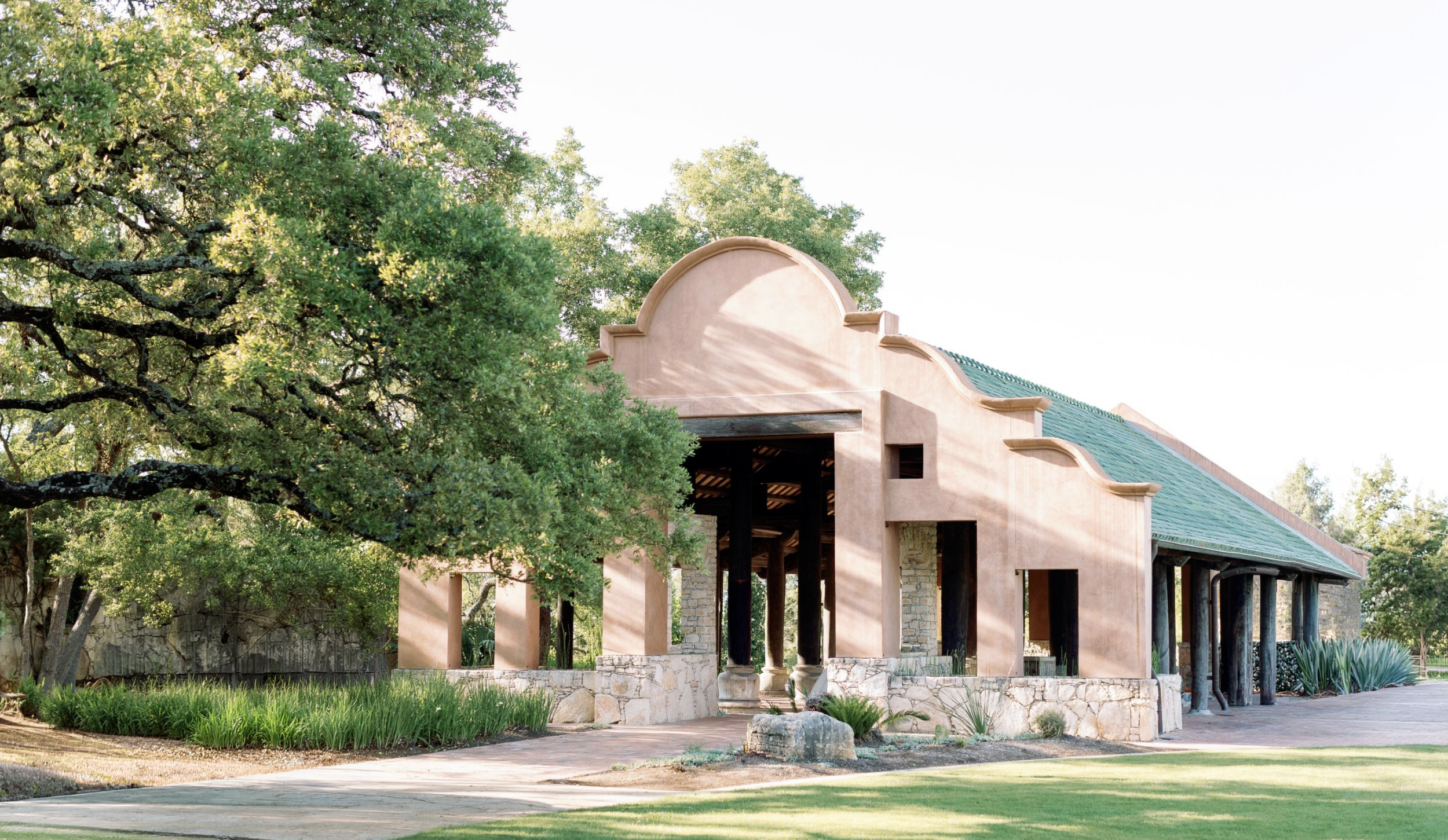
Located in Dripping Springs, Camp Lucy combines five distinct event settings with accommodations, dining, a spa, and additional experiences across the property.
Its settings blend architecture with the surrounding Hill Country landscape, including mature oak trees and vineyard views. For couples planning more than a single wedding-day event, the combination of gathering spaces and accommodations creates the opportunity for the property itself to become part of the broader celebration.
-
Omni Barton Creek Resort & Spa sits in the rolling landscape outside central Austin and offers a mix of indoor, outdoor, and indoor-outdoor wedding spaces.
The Hill Country Pavilion connects with event lawns and expansive views, while the Wildflower Atrium uses floor-to-ceiling windows to bring the surroundings into an interior setting. The result suits couples who want the landscape to remain present while retaining the flexibility and amenities of a full-service resort.
-
Set above the Texas Hill Country in San Antonio, Signia by Hilton La Cantera Resort & Spa brings together accommodations, dining, wellness, and multiple event spaces in a resort setting.
Wedding spaces include outdoor settings framed by Hill Country scenery as well as contemporary indoor venues such as The Calera, which connects with a private lawn. This balance makes it possible to incorporate the landscape while keeping much of the celebration on the same property.
Luxury Wedding Venues in Houston
Houston gives couples a wide range of options when choosing a setting. These three venues range from wooded grounds to contemporary architecture to a classic downtown luxury hotel.
-
Set within 27 wooded acres in Houston, The Houstonian offers an unexpected sense of retreat within the city. Wedding settings extend from ballrooms and the historic Manor House to outdoor spaces including the Meadow, Manor House Event Lawn, and a ceremony setting beneath a live oak.
This combination lets couples incorporate mature landscape and outdoor gatherings while retaining access to refined interior spaces, creating an experience that feels removed from the city without requiring guests to leave Houston.
-
POST Houston offers a distinctly contemporary alternative in Downtown Houston. The former Barbara Jordan Post Office has been reimagined as a cultural and event destination combining large-scale architecture, event spaces, immersive media art, and a rooftop park with views of the Houston skyline.
Rather than recreating the atmosphere of a traditional hotel or estate, POST allows the building's architecture and urban surroundings to define the experience. It is especially suited to couples drawn to design, city views, and a less conventional wedding environment.
-
Four Seasons Hotel Houston brings a celebration into a classic downtown luxury-hotel setting, with wedding spaces ranging from the Grand Ballroom and private salons to the outdoor Pool Deck.
Using several spaces can create a different atmosphere as the day progresses; for example, moving from an outdoor ceremony or cocktail hour to a formal indoor reception. The hotel's interiors and Grand Staircase also provide additional settings within the property.
What to Look for in a Texas Wedding Venue for Photography
A venue can be beautiful in person and still require careful planning to photograph well throughout an entire wedding day. When comparing properties, look beyond the ceremony backdrop or reception room and consider how light, architecture, and movement will work from getting ready through the final celebration.
-
Natural light can change considerably throughout a wedding day, so consider more than how a venue appears during a daytime tour. Look at the getting-ready spaces, how much window light reaches the interiors, and what happens as daylight begins to fade.
A ballroom with limited natural light isn't necessarily a disadvantage; it simply creates a different photographic environment than a glass-filled room, terrace, or outdoor dinner. Understanding those conditions early allows the photography and timeline to be planned intentionally.
-
The best venue for photography isn't always the one with the largest grounds. A thoughtful mix of architecture, interiors, landscape, and quieter spaces can add variety without requiring the couple to spend significant time away from their guests.
Look for places that feel connected to the venue itself rather than simply functioning as designated photo locations. A staircase, shaded garden, terrace, architectural corridor, or view across the landscape can each provide a different setting while keeping the photographs rooted in the celebration.
-
The same outdoor ceremony setting can photograph very differently depending on its orientation and the time of day. Consider where the sun will be during the ceremony itself, not only how the location looks when you tour it.
Working with the planner, venue, and photographer early can help balance guest comfort, the schedule, and available light rather than treating photography as a decision made after the timeline is already fixed.
-
Outdoor spaces may be an important reason for choosing a Texas venue, but the indoor alternative deserves equal attention. A weather plan should feel like another considered version of the celebration, not just a place to move if the original plan cannot happen.
When touring, ask to see exactly where the ceremony, cocktail hour, or portraits would move if conditions changed. Understanding those spaces in advance gives the creative team considerably more flexibility.
-
Photography is also affected by how easily everyone can move through the property. Getting-ready rooms, portrait locations, the ceremony, cocktail hour, and reception may look beautiful individually. Still, long transfers between them can take time away from both photographs and the celebration itself.
A venue with thoughtful flow lets the day unfold naturally, with portraits and candid moments happening within the rhythm of the wedding rather than repeatedly interrupting it.
When Is the Best Time of Year for a Wedding in Texas?
No single month is best for a wedding across Texas. The state covers a large geographic area, and conditions in Dallas, Austin, and the Hill Country differ from those closer to the Gulf Coast in Houston.
Spring and fall are particularly worth considering for celebrations with significant outdoor elements. They generally provide a transition away from the strongest summer heat in Dallas and Central Texas, although weather and temperatures can still vary considerably from year to year.
Summer weddings can also work well, particularly at venues with strong indoor spaces, but heat should become part of the planning conversation. Ceremony timing, shade, guest comfort, and how much time you plan outdoors can all influence the experience.
Houston's Gulf Coast climate deserves separate consideration because warmer, more humid conditions can make indoor alternatives particularly valuable.
From a photography perspective, season is only one part of the decision. Ceremony time, sunset, light direction, and access to comfortable indoor or shaded portrait locations can be just as important. Once you're considering a venue and date, planning around those specific conditions is more useful than relying on a general rule about Texas weather.
Planning a Destination Wedding in Texas
A destination wedding does not have to mean leaving the country. For couples bringing together guests from different cities or countries, Texas can be the destination itself, especially when the venue and surrounding area let the celebration extend beyond a single day.
-
A welcome dinner, wedding day, and farewell gathering can create more time with the people who have traveled to celebrate with you. Those events don't need to happen in the same space or have the same atmosphere.
A downtown hotel lets guests experience the city between events, while a Hill Country resort or estate can keep more of the weekend centered on one property.
-
Accessibility matters more when many guests are traveling. Consider not only airport access but also the distance between accommodations and the venue, and how guests will move between events.
This matters especially when comparing an urban property with a more secluded Hill Country destination.
-
For some couples, a destination wedding means having everyone together at one property. For others, the destination itself becomes part of the weekend, with guests staying in the city and moving between several locations.
Neither approach is inherently better. The venue should support how you actually want to spend the time with your guests, not simply how you want the wedding day to look.
-
Destination weddings often bring together local professionals and creative partners traveling with the couple. When choosing a planner, photographer, filmmaker, florist, or other vendor, consider both the work itself and how that person approaches travel, collaboration, and multi-day celebrations.
For photography, this means the decision doesn't have to be limited by where a photographer is based. It can begin with finding the perspective and body of work that feel right for the celebration.
Wedding Photography for a Texas Celebration
Choosing a wedding photographer is about more than finding someone based in the same location as your venue. For a destination celebration, consistency, perspective, and the way a photographer documents both the planned and unscripted parts of a wedding can be equally important.
I photograph weddings and celebrations internationally and am available for commissions in Texas. My approach brings together an awareness of light, architecture, and setting with the unscripted moments that give each celebration its own character.
For couples based in Texas but planning their wedding somewhere else, the same approach applies. Whether the celebration takes place in New York, Miami, Greece, Mexico, or another destination, the starting point is not simply where the photographer is based, but whether the work and perspective feel right for the celebration you are creating.
Frequently Asked Questions About Texas Weddings
-
A Texas marriage license must be used before the 90th day after it is issued, so couples should plan the application around their wedding date rather than obtaining it too far in advance.
There is also generally a 72-hour waiting period between issuing the license and the marriage ceremony. Texas law provides exceptions in certain circumstances, so couples should confirm the requirements that apply to them with the county clerk where they obtain the license.
-
No. Couples coming from another state can obtain a Texas marriage license for a wedding in Texas.
Application procedures can vary by county, however, so destination couples should confirm the current requirements with the county clerk where they plan to obtain their license before traveling.
-
Texas law authorizes several groups to perform marriage ceremonies, including licensed or ordained Christian ministers or priests, Jewish rabbis, authorized officers of religious organizations, and certain current, former, or retired judges.
Texas does not separately require an eligible officiant to obtain an officiant license or register with the state. Couples hoping to have a friend or family member conduct the ceremony should confirm that the person qualifies under current Texas law.
-
Beyond availability and included spaces, ask how the venue handles weather alternatives, vendor access, setup and breakdown, photography throughout the property, transportation, and any restrictions that could affect the celebration.
Also confirm policies for outside vendors, catering, décor, music, and additional wedding-weekend events. These details vary by property and should be verified directly with the venue before booking.
Planning a wedding in Texas or a destination beyond it?
Explore Andreas Sellinidis's destination wedding photography and get in touch to discuss your celebration.
VIEW DESTINATIONSDESTINATION WEDDING PORTFOLIO
Discover real celebrations photographed across iconic cities, coastlines, and private estates around the world.
VIEW PORTFOLIOWedding Photography Tips
Discover expert tips on timelines, lighting, portrait planning, and wedding-day preparation.
READ JOURNALExplore Weddings around USA